
Opening & Switching
Opening an NYC Restaurant? Prepare for Your First Used Cooking Oil Pickup
A five-borough opening checklist for used fryer oil, property access, provider verification and the first collection record.
The short answer
Before the first fryer-oil change, choose a designated container point, walk both the staff and collection routes, verify the proposed provider through NYC Business Integrity Commission resources, and confirm equipment and pickup details for the exact address. Keep fryer oil separate from grease interceptor waste and check the first pump-out record.
Map two different oil paths before opening
Draw a simple route from each fryer to the used cooking oil container. Mark the person who transfers cooled oil, the vessel used for that move and the shift lead who checks remaining space. A restaurant can have a functioning kitchen but no usable collection point if this route is left until the last week of construction. A hallway shared with deliveries or a stair between kitchen and storage can change the equipment discussion.
Keep that fryer-oil plan separate from wastewater equipment. NYC’s Department of Environmental Protection explains that grease interceptors control fats, oils and grease entering sewers and provides guidance on their installation and maintenance. Its business guidance also directs operators to approved trade-waste companies for grease collection. Use the official DEP page and your qualified plumbing and property contacts to check the interceptor arrangement for your own site; an oil-container pickup does not clean an interceptor.
Check the provider and written terms
NYC’s Business Integrity Commission publishes current lists of trade-waste licensees and registrants and explains the categories it regulates. Look up the proposed company through BIC’s approved-companies page, and ask the provider which authorization applies to the service proposed for your address. If a name or scope is unclear, ask BIC or the provider to clarify before treating a sales conversation as a service arrangement. The list changes, so check it when you make the decision rather than relying on an old screenshot.
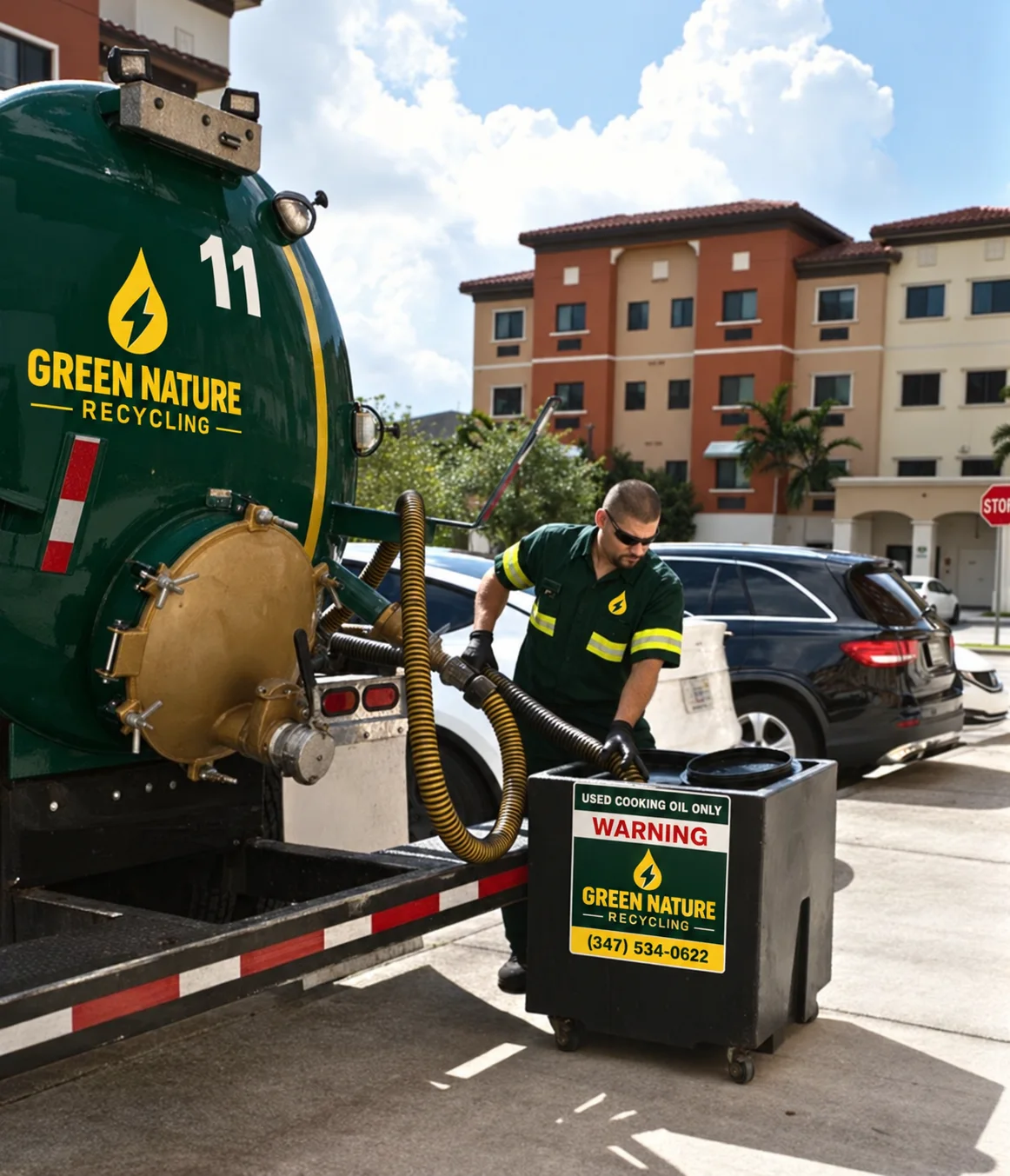
In the written proposal, identify the legal provider name, restaurant address, equipment ownership, placement, collection method, access window, first visit arrangement and end-of-service responsibilities. Ask what happens if the opening date shifts. If a qualifying oil payment is offered, read its measurement and payment terms; Green Nature provides a statement after each pump-out and monthly payments for qualifying accounts under their written terms. No quoted container size or proposed pickup date substitutes for confirmed site-specific terms.
Walk the route with the property in mind
Ask the landlord or building manager where an oil container may sit and who approves access for a collection crew. In a dense building, the answer may depend on a service elevator, loading dock, locked gate, alley, shared trash room or narrow delivery window. Walk from fryer to container and from street or dock to container separately. Note doors and turns that would make a wheeled vessel awkward. Get the address and entrance instructions into the service request, not only into a verbal tour.
Estimate oil output from the fryer count and intended change routine, then mark it as an opening estimate. Menu demand and hours may change quickly during launch. Ask the collector to review usable storage space and the local route against that estimate; nominal gallons on a tank are not all available operating space. Name a main and backup contact who can answer a crew’s access question. Green Nature covers the five NYC boroughs, with each location and arrangement reviewed.
- Confirm property permission for the exact container point.
- Record entry, gate, dock and elevator instructions.
- Name the kitchen transfer owner and two access contacts.
- Share a volume estimate and the assumptions behind it.
Check the first collection as an operating test
Before oil starts accumulating, confirm that equipment has arrived, the container is clearly identified and staff know how to keep water, food scraps, cleaning chemicals and trap waste out. Reconfirm the first collection arrangement when the opening schedule becomes firm. If construction moves the entrance or a building rule changes the access window, tell the provider before the crew travels. Support availability means questions can be raised; it does not guarantee an immediate pickup.
After the first pump-out, save the statement and compare its address, date and recorded amount with your kitchen transfer notes. Ask about a missing record or an unexpected quantity while the visit is recent. Watch how full the container becomes before the next visit, then revisit capacity and timing with the provider. This first cycle turns an opening estimate into a measured plan and gives the next shift manager a process they can repeat.
Common questions
Where can I check a proposed NYC waste company?
Use the NYC Business Integrity Commission approved-companies page and ask about the authorization relevant to the proposed service.
Does a fryer-oil pickup include interceptor cleaning?
No. Treat the used oil container and wastewater interceptor as separate services and records.
Can an opening date guarantee collection?
Confirm equipment and the first visit with the provider as the date and building access become firm.
Sources
Next steps for your kitchen
Local service planning
Plan oil collection for your kitchen
Tell us your address, fryer setup and access details. Our team can review coverage, equipment and an appropriate pickup plan.