
Collection & Storage
Choosing the Right Used Cooking Oil Container
Compare Green Nature’s 55, 70, 140 and 240 gallon formats against kitchen output and access.
The short answer
Choose a used cooking oil container by comparing expected output between pickups with usable space, then checking the full staff-transfer and crew-access route. Green Nature discusses a 55-gallon steel drum, 70-gallon indoor wheeled container, 140-gallon outdoor steel tank and 240-gallon outdoor steel bin, subject to site review and written equipment terms.
Start with the oil flow, not the biggest vessel
Count the oil that will leave all fryers during a normal collection interval, then consider busy periods and a delayed visit. The marked gallon size is a container specification, not a promise that the same quantity will be pumped out at every visit. An oversized vessel may waste scarce space; an undersized one can force staff to hold oil elsewhere before service.
For a new restaurant, estimate from the menu, number of fryers and expected changes, and revisit after the first several collections. For an existing site, use transfer notes and pump-out statements. A change in hours or production deserves a new capacity conversation.
Compare the four available formats
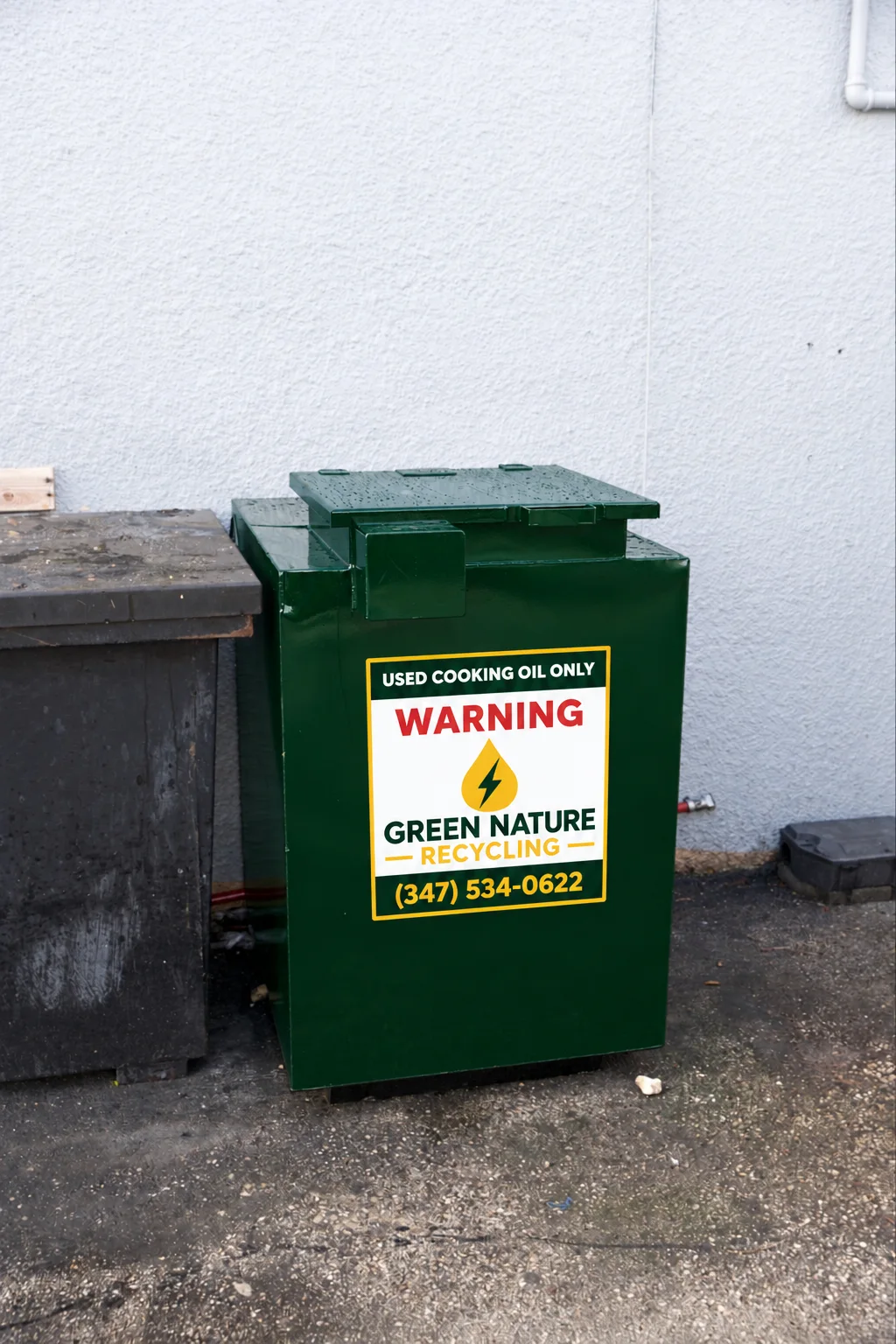
A 55-gallon steel drum is a compact option where the approved point has limited floor area. A 70-gallon indoor wheeled container can suit a permitted indoor storage location, provided doors, turns and the route to collection work. The 140-gallon outdoor steel tank gives more nominal capacity at a suitable exterior service point. The 240-gallon outdoor steel bin is the largest of these options and calls for enough room for staff use and scheduled pump-out.
These descriptions are starting points, not automatic eligibility. Container availability, placement, ownership, maintenance and removal terms belong in the written proposal for the address. If the property controls the loading area, bring it into the decision early.
- 55-gallon steel drum: compact point.
- 70-gallon indoor wheeled container: check doorways and turns.
- 140-gallon outdoor steel tank: check exterior approval and vehicle access.
- 240-gallon outdoor steel bin: review higher output and space together.
Walk both access routes
First walk the staff route from fryer to container with the intended transfer vessel in mind. Note distance, doors, ramps, stairs and areas customers use. Then walk the collection route from vehicle approach to the service point. Check gate hours, loading restrictions, surface condition, clearance and whether a crew can reach the container without moving unrelated equipment.
An indoor choice may save outdoor space but still fail if the crew cannot enter at collection time. An outdoor choice may simplify access but require property approval or a different staff transfer procedure. Send photos or measurements to the service team where a description alone is unclear.
Set the operating rules in writing
Before installation, agree on where the container will stand, who may move it, how staff should close it and whom to call if it leaks or fills early. Review equipment responsibility and what happens at the end of service. A container described as available does not imply that every site receives equipment at no charge.
Ask for a collection plan that matches the chosen format and expected oil output. Check the first pickup statement against the site address and the quantity recorded. If it differs from the estimate, use that real observation to revisit the size or route rather than forcing operations to fit the original guess.
Common questions
Does a 140-gallon tank mean 140 gallons are collected each time?
No. The label is nominal container capacity; the amount collected depends on actual oil present and the service record.
Can a wheeled container be kept indoors?
The 70-gallon indoor format is an option, subject to approved placement and workable transfer and collection routes.
Are containers free for every account?
Equipment availability and financial terms depend on the written proposal for the site.
Next steps for your kitchen
Local service planning
Plan oil collection for your kitchen
Tell us your address, fryer setup and access details. Our team can review coverage, equipment and an appropriate pickup plan.