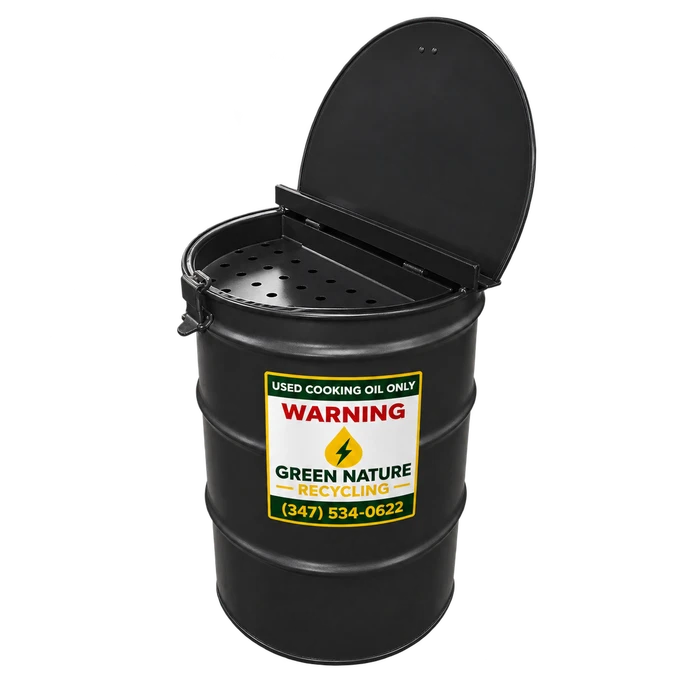
Compact storage
55 gallon
Steel drumA compact option when the approved collection point has limited floor space. Discuss how staff will transfer cooled oil and how the crew will reach the drum.

Equipment
Compare four container formats, then choose a workable place for staff and collection crews.

An appropriate container depends on oil volume, available space, service access, and how staff move oil from the kitchen. Tell us what is working and what creates spills or bottlenecks today. Our team can discuss available container options for your location.
Estimate how much oil is added between scheduled collections, including busy weekends or seasonal periods. Measure the space you can actually use and note doors, steps, pedestrian paths and other equipment nearby. Nominal gallon size is not the same as usable fill capacity. Ask about the fill limit and choose a container only if staff and the collection crew can safely reach it. Equipment availability, ownership and maintenance responsibilities should be confirmed in the proposal.
The usable capacity is the oil a container can hold while remaining closed and serviceable between pickups. A larger nominal size will not solve a narrow doorway, blocked dock or long staff transfer route.
Record the clear width and height of doors and gates, elevator dimensions if used, turns, steps and the space needed to open or service the container. A tank’s nominal volume says nothing about those clearances.
Ask for the manufacturer’s fill limit or marked maximum and the usable volume below it; do not treat nominal tank volume as space available for oil. Compare usable volume with typical and peak oil accumulated before the next collection.
Put placement, access, cleaning or repair responsibility and what happens at contract end in the written arrangement. A shared yard also needs one named property contact.
A compact option when the approved collection point has limited floor space. Discuss how staff will transfer cooled oil and how the crew will reach the drum.
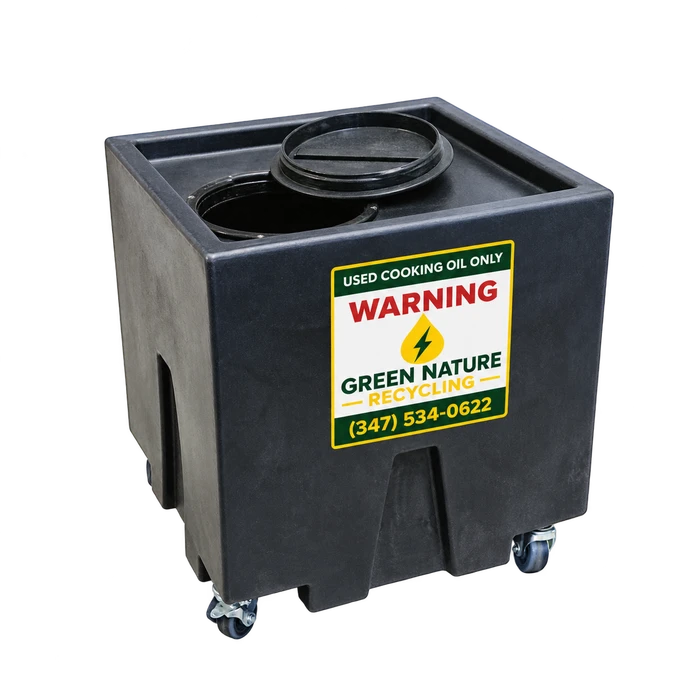
A wheeled plastic option for an approved indoor location. Check doorways, turning space and the route to collection before choosing it.

A larger outdoor option for kitchens with a suitable service area. Review oil output, vehicle access and property approval together.

The largest of these options suits a higher-volume review where there is room for staff access and scheduled pump-out.
The service process
Show us the storage area, route from fryer to container and any property rules.
We discuss available container options against oil volume, placement and service access.
Agree on who uses the container, keeps the lid closed and reports a full or damaged unit.
Place the container where staff can use it safely and a collection vehicle can reach it. Keep lids closed and the surrounding area clear. Let us know if access restrictions, a locked enclosure, or hours of operation affect service.
Set a simple staff routine for cooled oil: use the agreed transfer path, keep food waste and other liquids out of the container, close it after use and tell a manager when capacity is low. For a shared yard or dock, identify who controls access and who can authorize placement. Never assume a location is usable just because there is open space on a site plan.
A secure, well-positioned container can help reduce spills and unwanted access. Ask about options suited to your site; availability and placement are confirmed during the service review.
A workable storage point is close enough for staff to transfer cooled oil, away from customer traffic and reachable for collection. Share a photo of the proposed area and note gates, stairs or shared access.
FAQ
For an answer about your exact address or service agreement, call our team.
(347) 534-0622 →That depends on oil output, room to place it and pickup frequency. We review options for your site.
Describe the space, transfer path and collection access. Placement needs to work for staff and service.
Call with your service address and remaining capacity so the team can review available options.
The written service arrangement should identify equipment ownership and maintenance responsibility.