
For multi-location operators
Used Cooking Oil Collection for Restaurant Groups.
Restaurant groups need a view of the whole account and a workable plan at each door. Collect the details for every address first, then review regional volume, equipment, route access and records together.
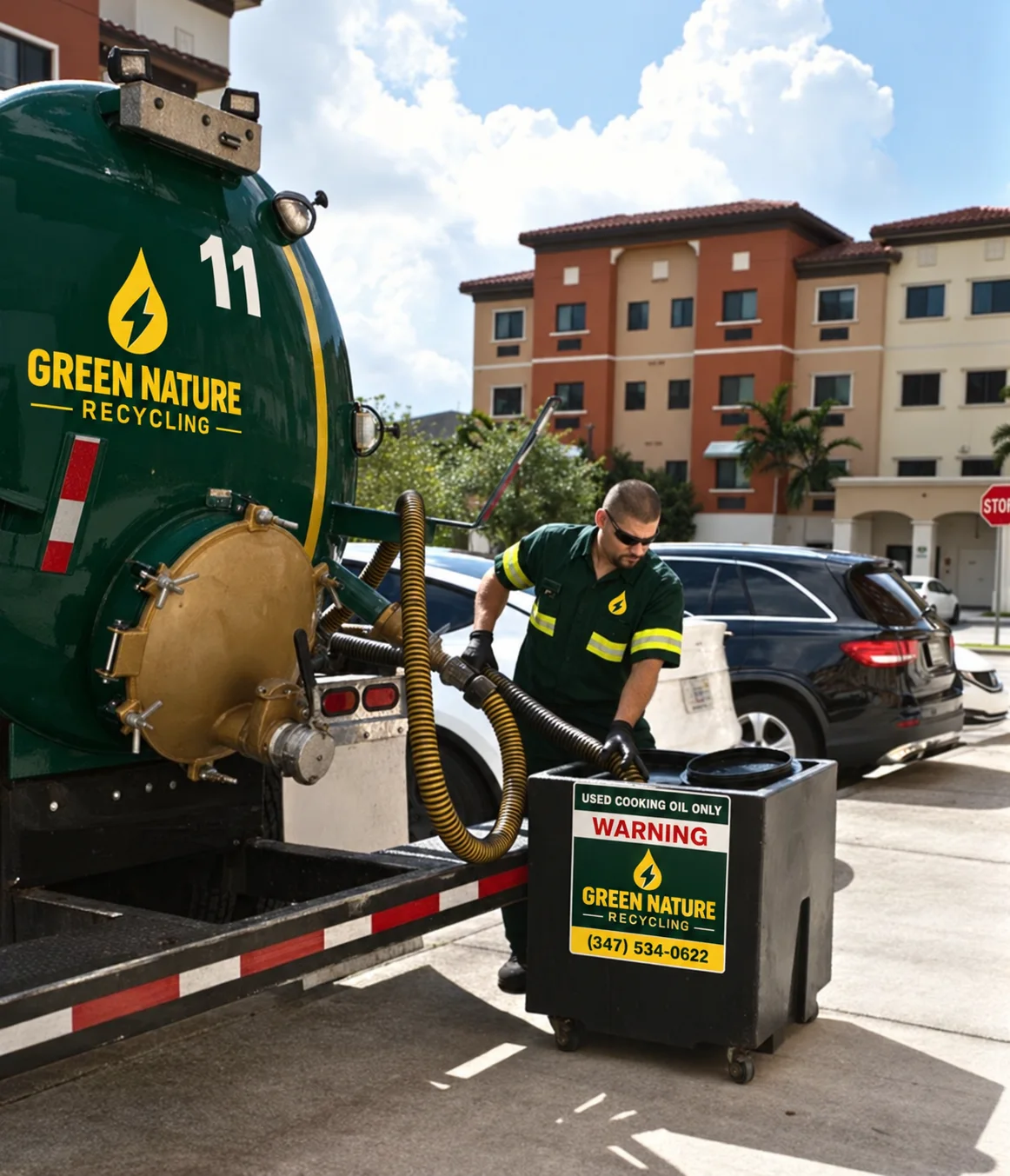
Make a location-by-location inventory
List every operating address, kitchen contact, fryer count, approximate weekly used-oil output and current container. Add opening or closing dates for locations in transition. A single brand name does not tell the crew which door, gate or loading area serves each kitchen.
Green Nature serves all New Jersey counties, all five NYC boroughs, Long Island, and selected Hudson Valley and Pennsylvania markets. Submit exact addresses for review; a nearby store’s coverage does not confirm another site automatically. Mark any location that needs a property approval or has a restricted service window.
Set a practical plan at each site
Compare output with usable container capacity and the path a crew can take to reach it. One location may need a drum indoors; another may have room for an outdoor tank. A common pickup interval is convenient for administration only when it fits each kitchen’s actual oil output and access.
Choose a primary site contact and a backup for every location. Keep gate codes, dock hours, parking restrictions and container placement current. A change in manager, menu or operating hours can alter the service plan even while the group agreement remains the same. Ask each manager to flag seasonal peaks and special events before the container approaches its usable limit.
Review regional terms in writing
Share the number of locations, expected output by address and combined regional volume. Green Nature can review available group options, but combined volume does not guarantee a higher rebate or identical equipment at every store. Ask for written terms that distinguish group-wide provisions from site-specific service details.
For qualifying accounts, the written agreement controls rebate eligibility, rate, measurement, adjustments and payment method. Green Nature provides a statement after every pump-out and makes qualifying rebate payments monthly. Compare proposals using the complete collection and recordkeeping terms rather than a headline payment figure alone.
Keep records easy to reconcile
Store each pump-out statement by service address and date. Check the recorded quantity and any adjustment promptly while the visit is still fresh. A central manager can then total each location for the month and compare the group total with a qualifying rebate payment under the agreement.
If a statement is missing or a line looks wrong, send the address, collection date and specific question to the service team. Green Nature offers 24/7 support for service questions. Review the record process during onboarding so each store knows who receives and checks its statements.
Group service questions
Can one schedule work for every location?
Possibly, but each kitchen’s output, container space, access and local route need review. A group agreement can still have location-specific service plans.
Does combined oil volume guarantee a higher rebate?
No. Green Nature can review combined regional volume and available options. Eligibility, rate and payment method are set by the written agreement.
How can a group reconcile payments?
Keep statements from every pump-out organized by location and date. Qualifying rebate payments are monthly under the written agreement; reconcile location subtotals before the group total.
Local service planning
Review a plan for your restaurant group
Send the location count and exact addresses. Our team can assess coverage, local pickup needs and available written terms.