
Collection service
Used cooking oil collection for commercial kitchens
Keep fryer oil out of the way with a collection plan that fits your kitchen and local route.
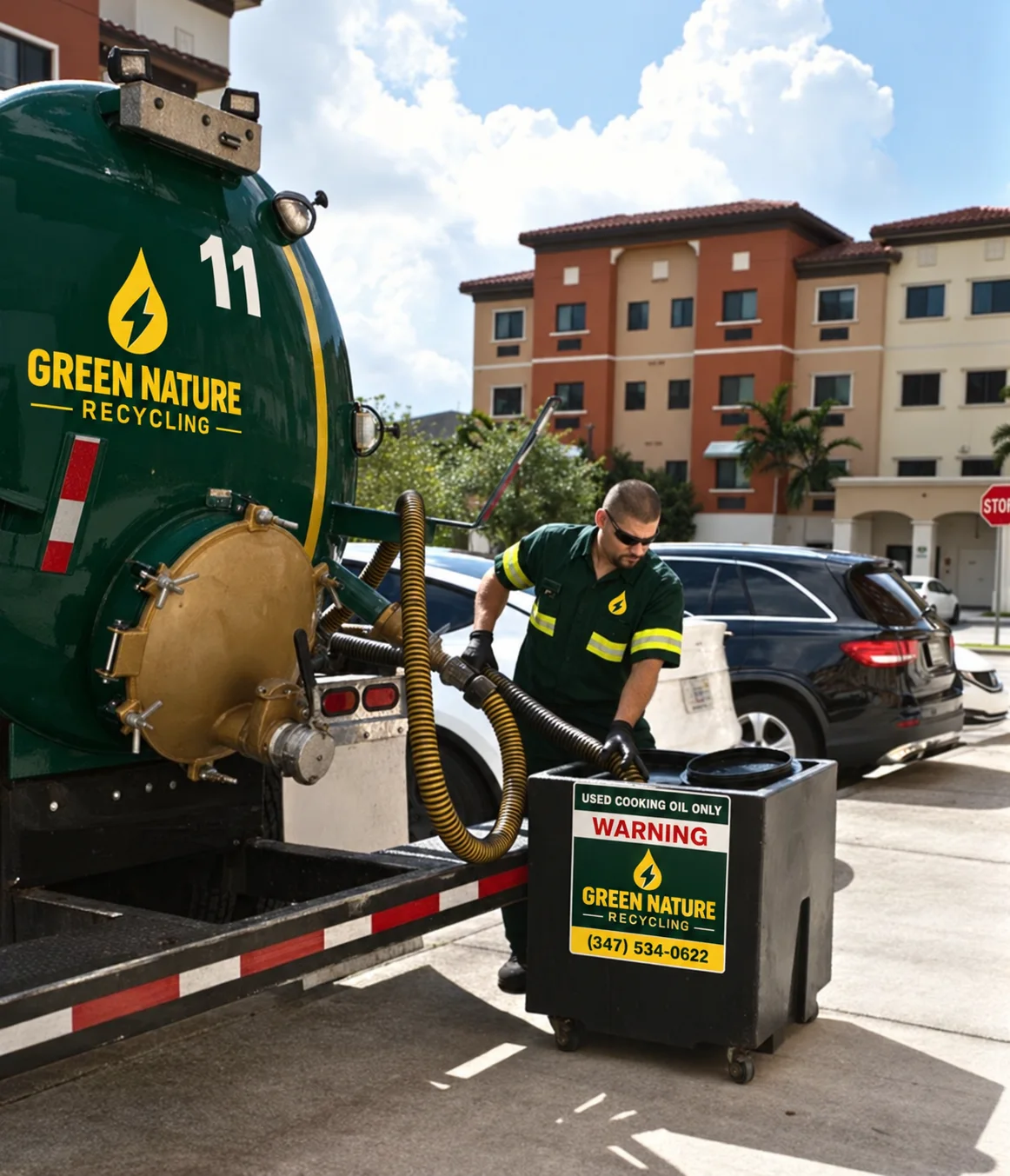
What restaurant grease pickup covers
This service collects used cooking oil from commercial fryers. Restaurant operators may call it fryer oil pickup, yellow grease collection or restaurant grease pickup. In each case, the useful first question is how much cooking oil your kitchen generates and where it can be stored for collection.
It is a service for an ongoing commercial oil stream, including qualifying restaurant and food-service operations. It is separate from household cooking-oil drop-off, motor-oil pickup and grease trap cleaning. Existing Green Nature oil customers can ask about cleaning smaller traps; trap waste never belongs in used cooking oil containers. If you manage several kitchens, identify each collection address rather than assuming one plan fits every location.
Decisions to make before signing
For a recurring fryer-oil pickup, estimate how much yellow grease accumulates between visits, then match storage and access to that amount. Grease trap waste is a separate stream. Existing Green Nature used cooking oil customers can ask about smaller-trap cleaning, subject to site review.
Estimate output, then the longest gap
Illustrative estimate: 2 fryers × 5 gallons discarded per change × 3 changes a week = 30 gallons a week. Actual discarded volume varies. Plan for the oil expected over the longest gap between visits, including a busy weekend; this example is not a required container capacity or pickup frequency.
Assign two handoffs
Kitchen staff need an agreed route to closed storage; a manager needs to monitor capacity and alert the collector when output, hours or access changes. Ask who handles each step at opening, closing and manager turnover.
Compare complete terms
Check cadence, equipment, access and any qualifying payment together. A scheduled visit only works if the crew can reach the container.
| Term | What clear terms contain |
|---|---|
| Collection | Pickup frequency and how a changed oil volume is handled. |
| Equipment | Container ownership, placement, maintenance and removal at contract end. |
| Measurement | Measurement unit, a statement after every pump-out and the calculation for any qualifying rebate. |
| Access | Approved collection point, entry contact and loading restrictions. |
| Cancellation | Notice method, end date and remaining equipment or payment obligations. |
The service process
From first call to first pickup
- 01
Share your kitchen
Send the address, fryer count, oil output and a description of the current setup.
- 02
Agree on the setup
We discuss container placement, access, route timing and the proposed terms for your location.
- 03
Start collection
Staff put cooled used cooking oil in the agreed container; the team collects it on the arranged route.
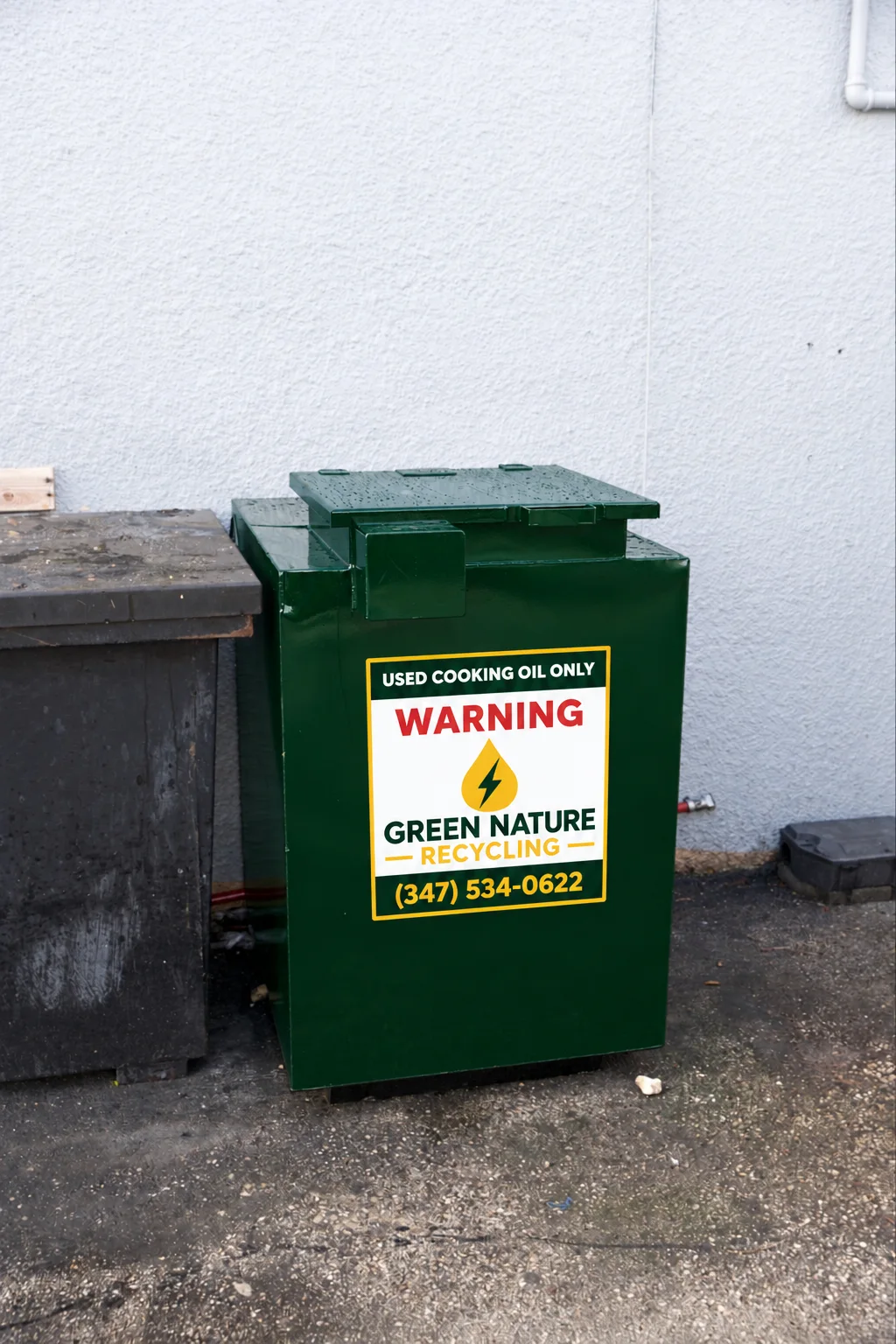
A pickup plan based on your operation
Tell us your address, number of fryers, oil change frequency, and where a container can be serviced. Our team confirms coverage and discusses a pickup cadence based on volume, container capacity, access and route availability. A small kitchen that changes oil occasionally and a busy kitchen with several fryers will need different capacity reviews.
Collection arrangements are set with your team before service begins. Tell us about seasonal peaks, catering events or planned fryer additions. If output, operating hours or loading rules change, contact us so the plan can be reviewed. An agreed schedule should leave enough room in the container between visits without requiring staff to overfill it.
From fryer to collection
Follow your kitchen procedure for cooling and transferring used cooking oil, then use the agreed closed storage container. Keep food scraps, water, cleaning chemicals and other waste out of that oil. Keep the container lid closed and the access path clear for pickup. Our team collects the oil on the arranged route and sends it for recycling.
Before the first collection, name the manager who will handle service questions, describe any gates or shared docks, and agree on where the crew can reach the container. For an upper-floor kitchen, include the freight elevator or transfer path. That detail helps determine whether the proposed equipment and route can actually work at the site.
- Share the exact service address, a contact person and a realistic oil-volume estimate.
- Discuss storage location, fryer-to-container transfer and vehicle access.
- Confirm collection cadence, equipment responsibilities and any qualifying payment terms in writing.
Keep a closed collection container accessible to trained staff. Let us know when cooking volume, access hours or the manager responsible for pickup changes so the plan can keep pace with your kitchen.
Confirm your service area
Green Nature serves all New Jersey counties, the five New York City boroughs, Long Island, selected Hudson Valley counties and selected Pennsylvania markets. Use the county map and ask us to confirm the exact address. The local plan also depends on a workable collection point and route, even inside a covered market.
FAQ
Questions before your first pickup?
For an answer about your exact address or service agreement, call our team.
(347) 534-0622 →How often will you collect?
Frequency is based on oil volume, container capacity, site access and the agreed local route.
Are containers included?
Available equipment and responsibility for it are included in the proposal for your location.
Do you take grease trap waste?
Trap waste stays separate from used cooking oil containers. For existing Green Nature oil customers, we also review cleaning of smaller grease traps in NJ, NY and PA, subject to address, trap size and access confirmation. See our grease trap cleaning guide.
Can we change providers?
Yes. Check your current agreement and container ownership, then share your target transition date with us.
Is 24/7 pickup available?
Our team offers 24/7 support for service questions. Pickup timing follows the route agreed for your site.