
NYC restaurant service
New York City used cooking oil pickup
Plan fryer oil collection across all five boroughs around your kitchen’s volume, storage space and building access.
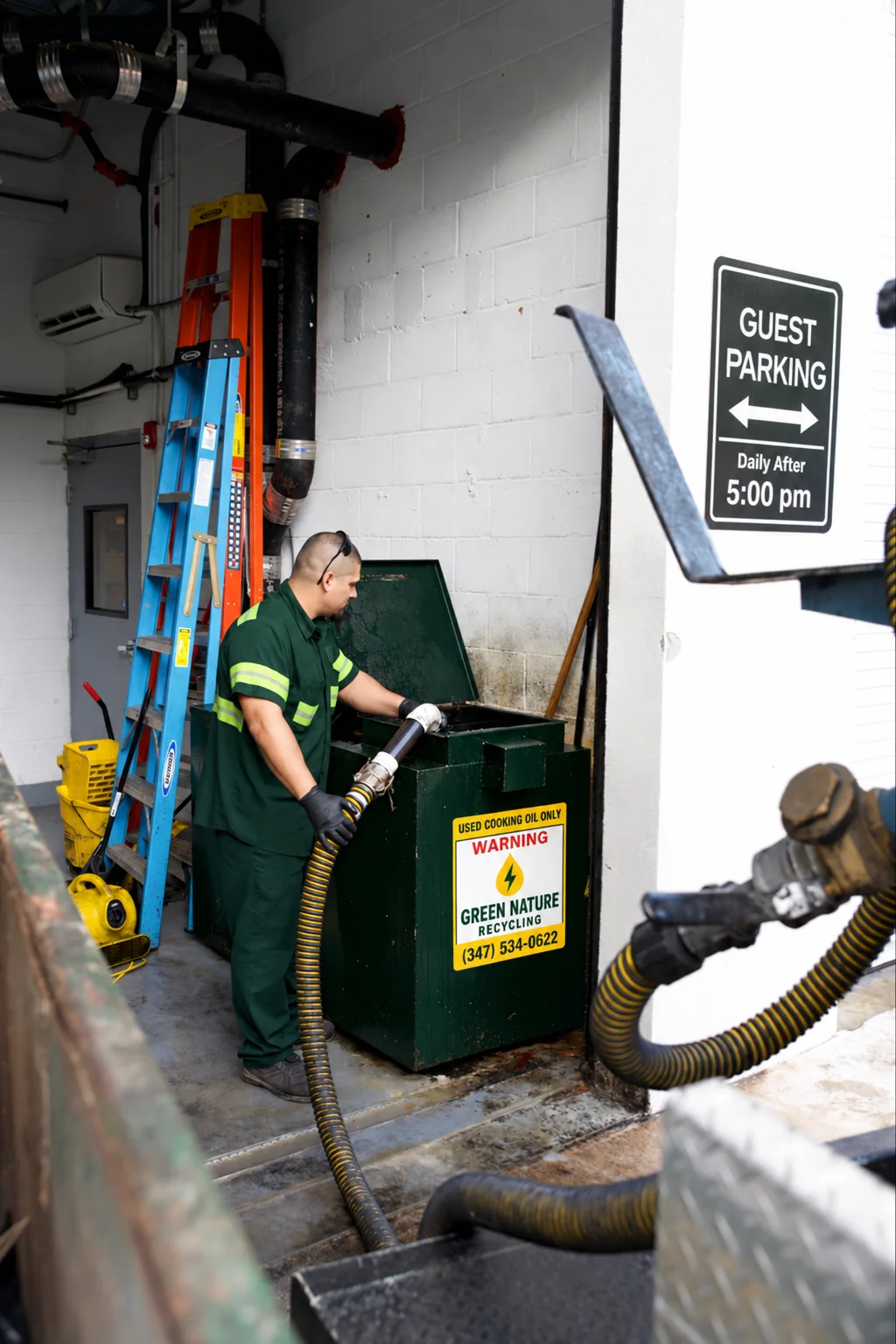
Restaurant oil collection across the five boroughs
Green Nature reviews ongoing commercial used cooking oil pickup for restaurants and other food-service kitchens in Manhattan, Brooklyn, Queens, the Bronx and Staten Island. This is the used fryer oil stream also called yellow grease or restaurant grease; trap waste stays separate from used cooking oil containers. Existing Green Nature oil customers can ask about smaller-trap cleaning, subject to location, trap size and access review. Motor oil and household drop-off are separate needs.
A borough alone cannot determine a collection setup. A managed high-rise may require a freight elevator booking and dock approval, while a street-level restaurant may use a rear entrance or shared enclosure. A commissary needs one responsible contact for the combined oil stream. The practical question is where cooled oil can be held in a closed container that staff and a collection crew can reach.
For sites beyond the city, see New York coverage for Long Island and selected Hudson Valley inquiries. Send the exact address to confirm the route and proposed terms.
The service process
From first call to first pickup
- 01
Describe each kitchen
Send the address, fryer count, typical and peak oil output, plus a site contact.
- 02
Agree on storage and access
Review container space, the staff transfer path, building rules and a reachable collection point.
- 03
Confirm the local plan
Discuss route timing, equipment responsibility and any qualifying payment terms in writing.
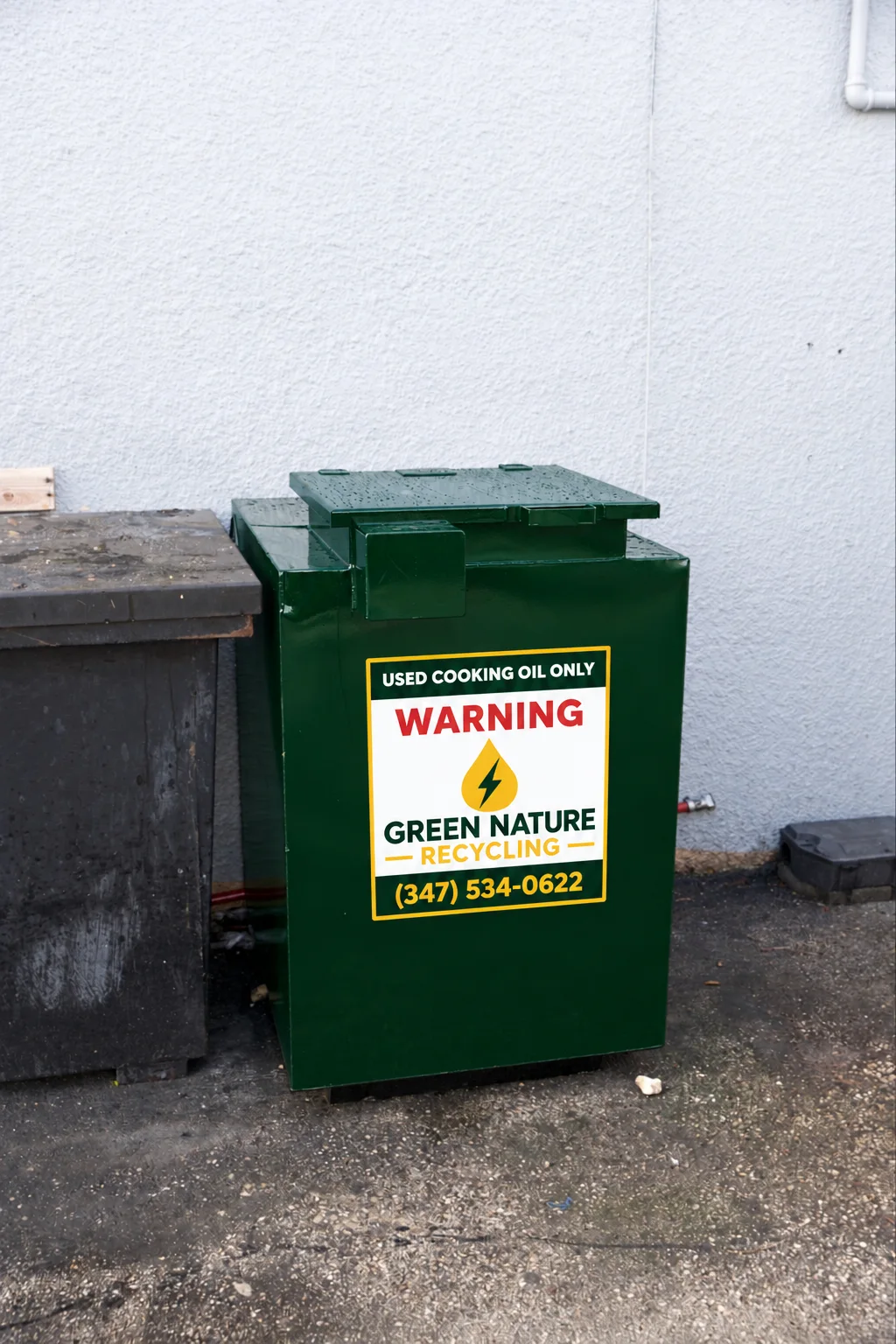
A short access and storage checklist
Before requesting pickup, walk the route that oil and the collection crew would take. For an upper-floor kitchen, record whether a freight elevator is required and who controls it. At a rear entrance or shared yard, note gates, loading windows and other tenants’ deliveries. For a commissary, identify who owns the handling routine and who can authorize a shared container.
- Exact street address and a contact who can approve collection access.
- Fryer count, oil changes and approximate volume in an ordinary week and a busy week.
- Proposed closed-container location and any property or landlord approval needed.
- Gate, dock, elevator, corridor or vehicle approach restrictions.
- Current provider notice period and container owner, if changing service.
Opening a location? Use the NYC first-pickup checklist to review provider verification, building access and the first collection record. Keep used cooking oil separate from water, food scraps and cleaning chemicals, and close the container after transfer. If output rises or the container fills earlier than expected, contact support with the site address and remaining capacity. Support is available 24/7 for service questions; pickup times follow the agreed site and route plan.
Choosing a collection arrangement
Frequency follows the oil produced between visits, usable container capacity and access windows. A kitchen that adds fryers, extends hours or has event-heavy weeks should say so before a schedule is set. Ask how to report a change and who maintains the container under the proposed agreement.
For a new opening, the first useful step is an address and access review before equipment placement. For a provider change, settle the old agreement and equipment removal dates before arranging the new setup. A multi-site group should send one list with a separate volume and access note for each address; neighboring restaurants can need different collection plans. Read the collection guide, container guide or switching checklist, then request a site review.
FAQ
NYC used cooking oil pickup questions
For an answer about your exact address or service agreement, call our team.
(347) 534-0622 →Do you serve all five New York City boroughs?
Yes. We review commercial used cooking oil collection in Manhattan, Brooklyn, Queens, the Bronx and Staten Island. Share the exact address so the local route and site setup can be confirmed.
Can a kitchen in a managed high-rise request pickup?
Yes. Describe the freight elevator, transfer path, loading rules, approved storage location and building contact. The team will assess a workable arrangement before confirming service.
How often can our restaurant schedule collection?
Pickup frequency depends on fryer oil volume, container capacity, building access and the available route. Give both typical and busy-period output so the plan has enough capacity.
What should a new restaurant send before opening?
Send the opening address, expected fryer count, proposed storage point, access rules and the date the kitchen expects to begin producing oil. Equipment and first collection timing are confirmed for that site.
Can we switch from another oil collector?
Yes. Check your existing agreement, notice period and container ownership first. Share those details and the desired transition date so a handoff can be planned without assuming the old equipment can stay.
Can one manager request service for several NYC locations?
Yes. List each address, site contact, oil estimate and access restriction. Collection and any qualifying payment terms are reviewed by location.